
Five-a-Side Pitch Cage System
A pitch cage keeps the ball on the pitch, protects the players and saves the rhythm of the match from being spent fetching the ball.
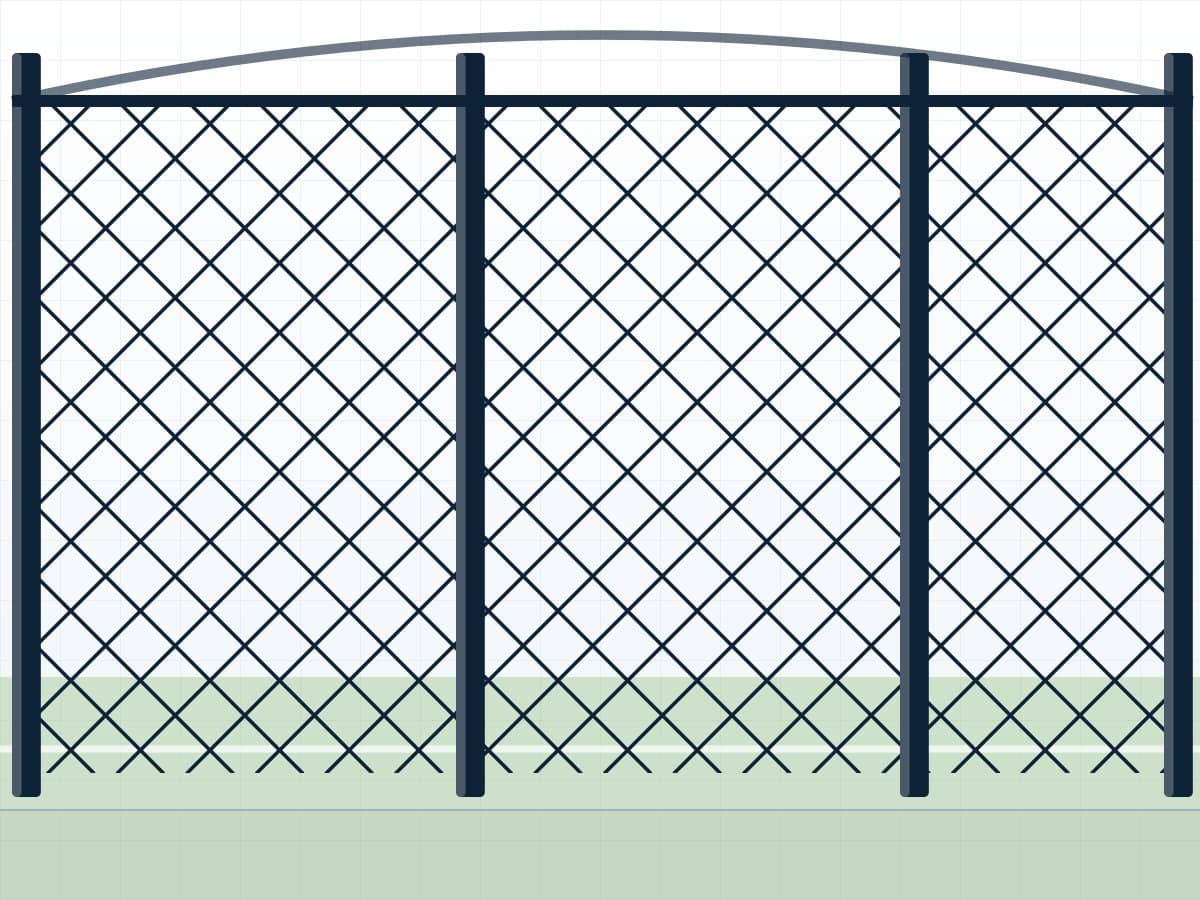
The aperture of the cage is chosen noticeably smaller than the diameter of the ball played on the pitch. Otherwise the ball wedges into the mesh; every attempt to free it stretches the wire and tires the connection points. The right aperture is the simplest decision that extends the life of the cage.
The height does not have to be the same on every side of the pitch. Where the ball escapes most often is behind the goals; raising that line and keeping the side edges lower is both more economical and less enclosing than closing the whole perimeter at the same height.
Frame and netting cannot be considered separately. Galvanised tube uprights sit on reinforced concrete foundations or flanged anchors, and the netting is tied to that skeleton with a tensioning rope. If the tension is insufficient the netting throws the ball back instead of absorbing it, and wears along the bottom edge over time.
Frequently asked questions
PVC coated woven wire is more durable and resists the weather for longer, while rope netting receives the ball more softly and reduces noise. Wire along the sides with netting on the raised sections behind the goals is a common combination.
Yes. If the uprights are sound, only the netting or the wire is replaced, which is far more economical than building the system again. We check the welds and foundations of the frame on site before deciding.
Get a quote for Five-a-Side Pitch Cage System
Tell us the length and the condition of the ground; we will send your detailed quote within 48 hours of the survey.