
Artificial Turf
Artificial turf keeps the same look and the same playing surface all year without watering or mowing.
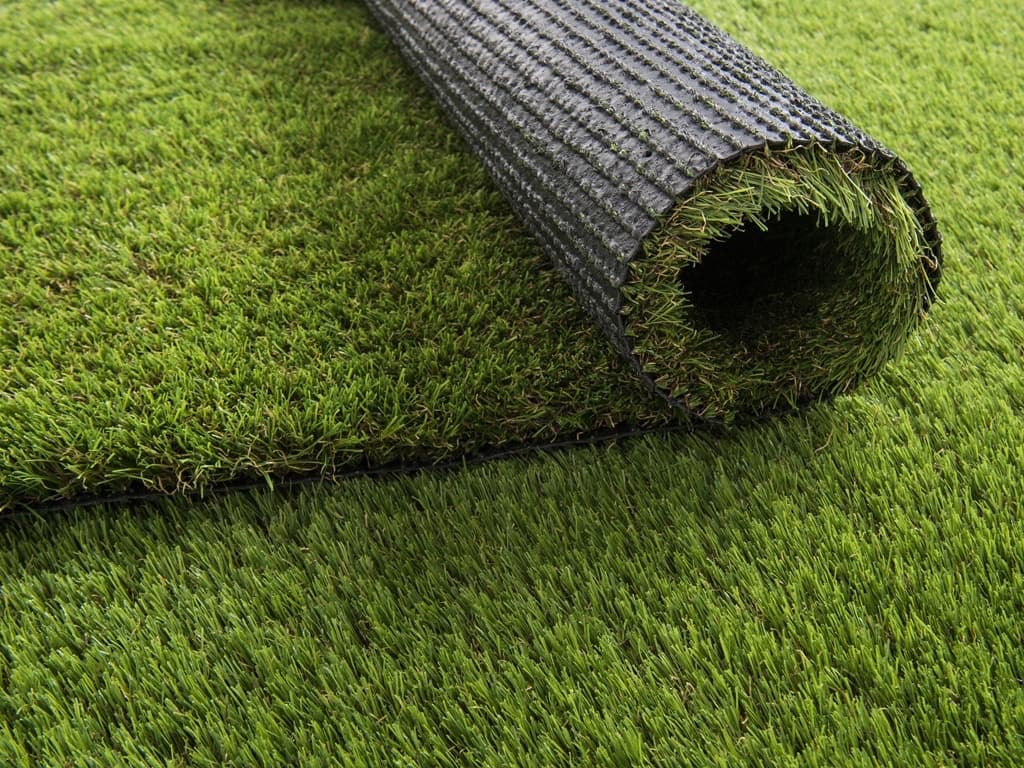
Pile height and density decide how the turf behaves. A long, open pile tends to lie down, while a short, dense pile stays upright underfoot. How the ball rolls on a pitch, and how the turf looks in a garden, both come out of the balance between those two.
Infill is what holds the pile up. Silica sand weighs the carpet down onto the base, and rubber granules soften the impact of each step. Landscaping rarely needs infill at all; on a pitch, leaving it out lays the pile down early and makes the surface harder on players.
The drainage holes in the backing only work if the layer beneath passes water. Without compacted crushed stone and an even fall, rainwater sits under the carpet and the seam tapes open in time. Joining the seams along the pile direction also keeps them out of sight.
Frequently asked questions
It needs no watering or mowing, but on a busy pitch the infill has to be brushed regularly and leaves cleared so the pile stays upright. In landscaping the intervals are far longer.
It can. The slab must have a fall and somewhere for the water to go, otherwise it collects under the carpet. In play areas laid over concrete we recommend a shock absorbing layer underneath.
Get a quote for Artificial Turf
Tell us the length and the condition of the ground; we will send your detailed quote within 48 hours of the survey.