
Tennis and Basketball Court Enclosure
On a tennis or basketball court the enclosure is the cheapest and most lasting way of keeping play going without interruption.
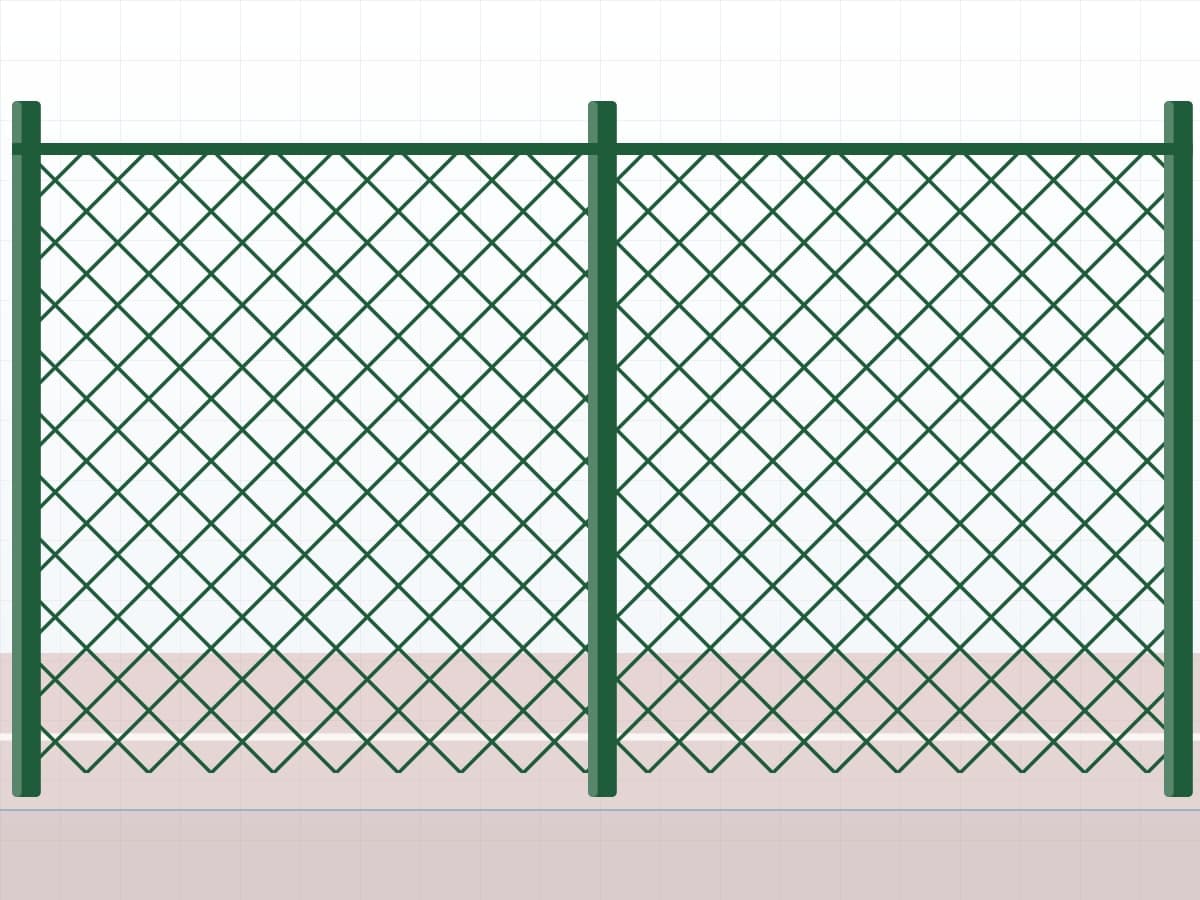
On a tennis court the enclosure does not only hold the ball in, it manages the wind. A screen fitted to the mesh cuts the air movement inside the court and reduces how far the ball drifts; the same screen hides movement in the background and makes it easier for the player to follow the ball.
A fence with a windbreak screen added is no longer permeable; the whole surface transfers the wind load into the uprights. That is why on screened courts we tighten the upright spacing and enlarge the foundations. The screen must also be fixed continuously along its edge rather than at isolated points.
A basketball court makes do with a lower enclosure than tennis, because the ball usually leaves the court after bouncing off the ground. What is raised instead is the line behind the baskets and the edge facing the road. In school yards the gate separating the court from the surrounding area becomes the most used part of the enclosure.
Frequently asked questions
It is not essential, but on exposed courts it noticeably improves the quality of play. If a screen is going to be added, the structural calculation of the fence should account for it from the start; a screen added later strains the uprights.
PVC coated woven wire is the most common choice in school yards: it leaves no sharp ends, gives against the ball and costs less than a welded mesh panel. We recommend raising the edge that faces the road.
Get a quote for Tennis and Basketball Court Enclosure
Tell us the length and the condition of the ground; we will send your detailed quote within 48 hours of the survey.